The Clock Tower That Defines Auburn University
Whether you're visiting Auburn University for the first time, returning for a football weekend or reliving your college days, one landmark immediately captures your attention. Samford Hall is Auburn University's most recognized landmark and a proud symbol of the Auburn story. Rising above the center of campus, its red brick walls and iconic clock tower reflect more than a century of resilience, tradition and Auburn spirit.
From Old Main to Renewal
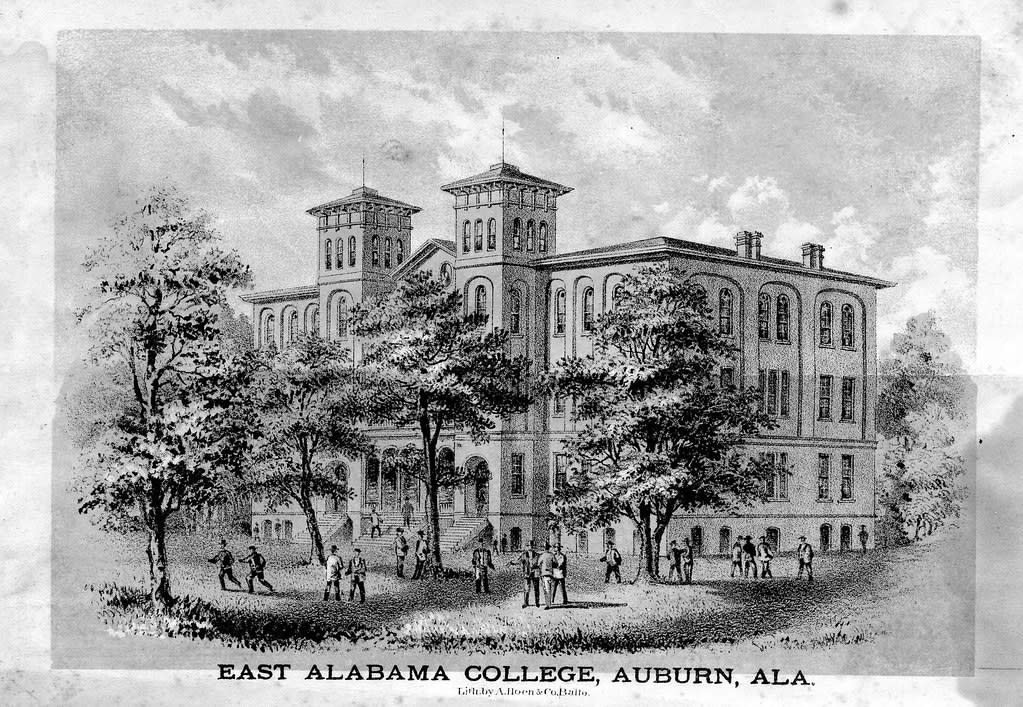
The story begins in 1859 when East Alabama Male College opened its first large classroom building, known as Old Main. For nearly 30 years, it served as the center of academic life until a devastating fire destroyed it in June 1887.
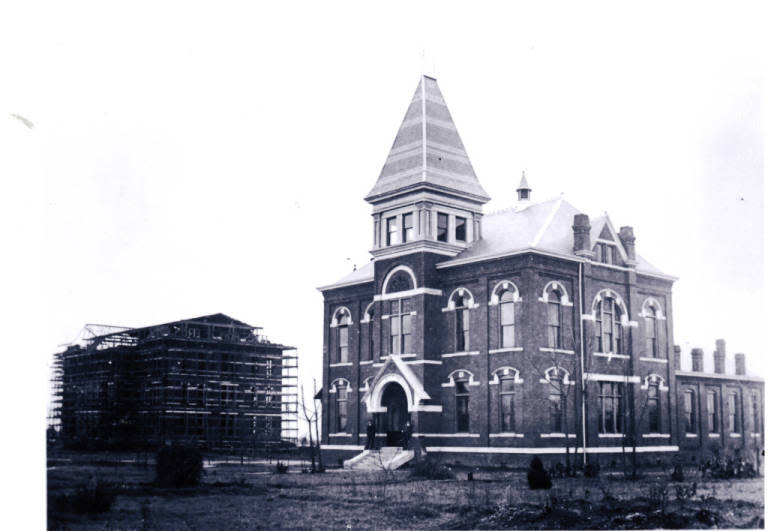
Just one year later, construction began on a new building designed by the architectural firm Bruce and Morgan. Salvaged bricks from Old Main were incorporated into the foundation, linking Auburn's past to its future. According to tradition, an 8-year-old boy named Charles B. Glenn placed the first brick, a small but meaningful gesture that marked the beginning of a new chapter for the university.
A Building of Many Purposes
When it opened in 1888, the new structure housed classrooms, faculty offices and the college library. As Auburn continued to grow, the library moved into its own building in 1909, allowing Samford Hall to evolve into new roles. Today, it houses the offices of the university's president, provost and other administrative leaders, making it both the symbolic and administrative heart of Auburn University.
A Name with Meaning
In May 1929, the building was officially named Samford Hall in honor of William James Samford, an Auburn graduate and Alabama's 31st governor. The name gave the structure a lasting identity while connecting Auburn University to the broader history of the state.
The Voice of the Clock Tower
The clock tower was completed in 1889 with the addition of a bell and timekeeping system. The clock was modernized in 1941 and later upgraded with an electronic carillon in the 1990s. Today, the chimes mark each quarter hour with the Westminster melody, while at noon the tower plays Auburn University's fight song, "War Eagle." For many students, alumni and visitors, the familiar sound of the bells is an unmistakable reminder of home on the Plains.
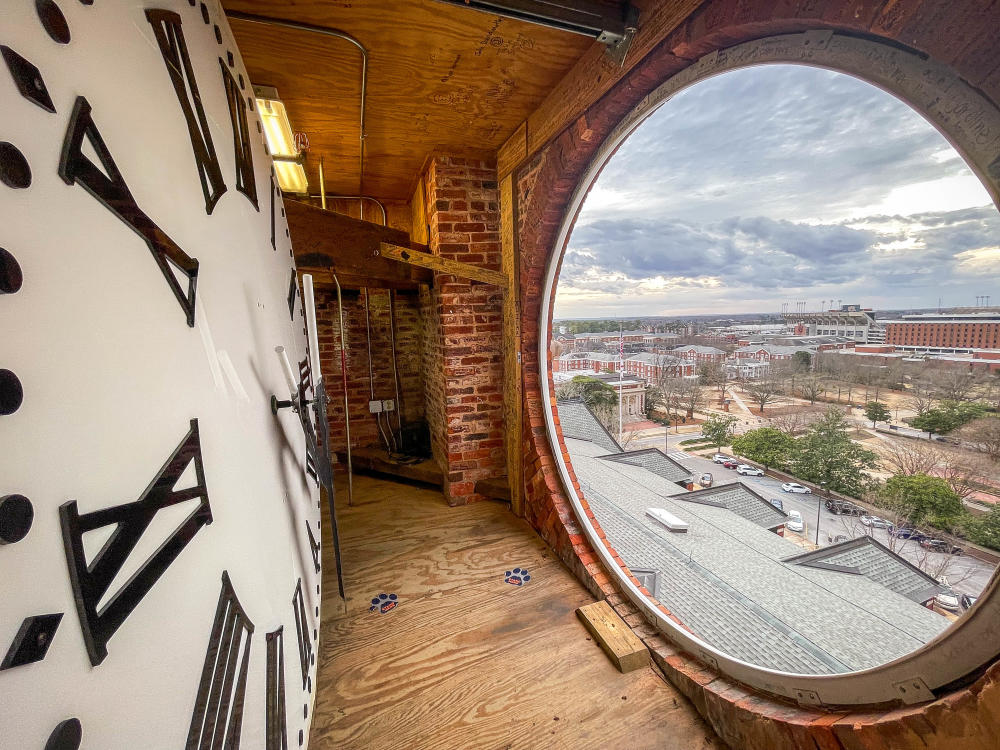
Only a select few ever have the opportunity to climb inside the clock tower and experience one of Auburn's most unique views of campus.
An Enduring Auburn Symbol
Samford Hall anchors the Auburn University Historic District, which was added to the National Register of Historic Places in 1976. Whether you're touring campus, attending an Auburn football game, visiting a prospective student or simply exploring Auburn, it remains one of the university's most photographed landmarks and a must-see stop.
More than a historic building, Samford Hall tells the story of Auburn's resilience and tradition. From the ashes of Old Main to the iconic clock tower that watches over campus today, it has stood at the heart of Auburn University for more than 135 years and continues to welcome generations of students, alumni and visitors.