Across three facilities, Auburn-Opelika offers 51 dedicated pickleball courts and 34 tennis courts, creating a court-sports lineup built for both everyday play and competitive events. Some courts are covered, six are indoors, and the tennis inventory includes both hard and clay surfaces. Together, that variety gives players and rights holders the flexibility to support everything from a casual morning match to a regional championship.

The larger story is how often those courts come to life. Local players use them throughout the week, while tournaments bring competitors from across Alabama and beyond. That steady mix of community play and visitor-driven competition has helped pickleball and tennis become an important part of Auburn-Opelika’s growing sports landscape.

Pickleball Capacity Across Two Cities

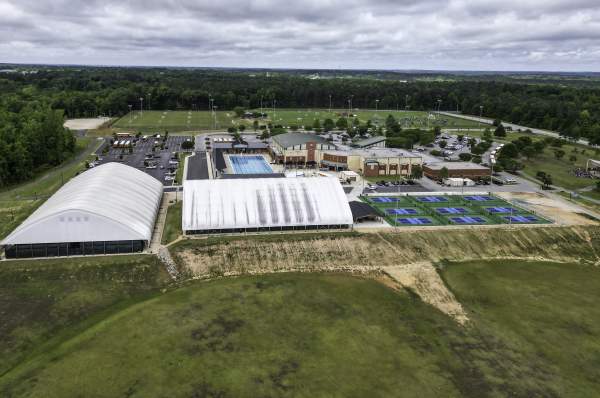
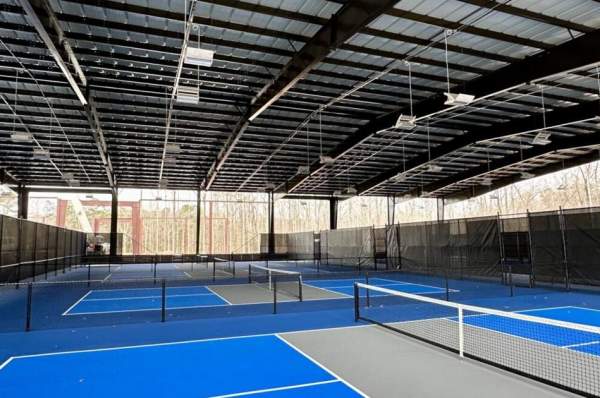
Pickleball’s growth in Auburn-Opelika is easy to see in Opelika, where the Opelika Pickleball Facility has expanded to 33 dedicated courts. The facility includes 24 covered regulation-size courts across two pavilions, each individually fenced and equipped with LED lighting, along with nine additional open-air courts that add valuable capacity for daily play and tournament schedules. Located behind the Opelika Sportsplex and Aquatics Center, the venue also gives players access to restrooms, showers, lockers, concessions, meeting areas, and shaded gathering space at the Sam Bailey Pickleball Pavilion.

That investment has helped Opelika become a steady home for pickleball events serving a range of ages and competition levels. The facility has hosted Alabama Senior Olympics pickleball competition, including the 2025 and 2026 events, along with recurring tournaments such as Paddles at the Plex and larger sanctioned competitions. The story behind that growth is explored further in A Brief History of Pickleball in Auburn-Opelika, which traces how Opelika recognized the sport’s momentum early and continued expanding as participation increased.

A few miles away, Lake Wilmore Park Recreation Center gives Auburn its own strong pickleball presence with 18 covered outdoor courts and LED lighting. The courts are open to the public free of charge from sunrise to 9 p.m. on a first-come, first-served basis, except when reserved for Auburn Parks and Recreation programming. Together, Opelika and Auburn offer 51 dedicated pickleball courts across two neighboring cities, giving the destination a flexible court inventory that supports local play, instructional programs, league schedules, and larger events without relying on a single facility to meet every need.

Three Ways to Play at One Facility

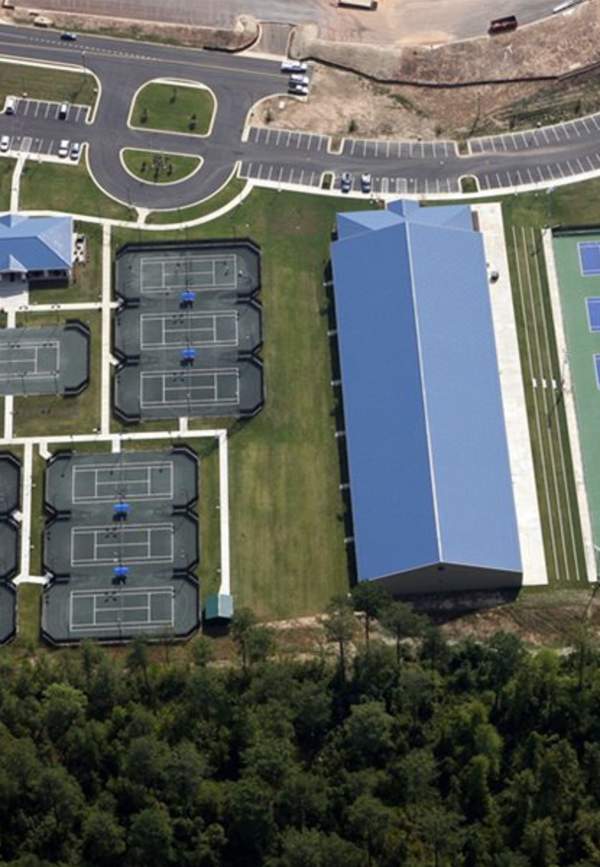
While pickleball has quickly expanded across both cities, Auburn-Opelika’s tennis infrastructure has been built for high-level competition for years. The City of Auburn/Auburn University Yarbrough Tennis Center brings 34 courts together in one facility, with six indoor courts, 12 outdoor hard courts, and 16 outdoor clay courts. That range of surfaces gives tournament organizers valuable flexibility, allowing matches to be scheduled by surface, division, or format, while also providing an indoor option when weather becomes a factor. The 33,314-square-foot indoor facility includes locker rooms, meeting space, and a pro shop, while the outdoor courts include stadium seating on the hard courts and a stadium court among the clay courts.

Yarbrough is also home to Auburn University’s men’s and women’s tennis programs, giving the facility a strong connection to collegiate competition. Since opening in 2007, it has hosted the 2008 SEC Women’s Tennis Championship and the SEC Men’s Tennis Championship in 2009 and 2023. Its event history extends beyond college tennis as well, with USTA Alabama State League 40’s Championships in 2024 and 2025, a weekend of the USTA Southern 40’s League Championship in 2024, and the Southern NTRP Fast4 National Qualifier in 2023. Together, those events show why Yarbrough’s layout matters. Its mix of hard, clay, and indoor courts gives Auburn-Opelika a tennis venue that can adapt to different competition levels, scheduling needs, and changing conditions.

85 Courts Across Three Facilities

Auburn-Opelika’s court-sports capacity is easy to see, but the real value is how often those courts come to life beyond tournament weekends. Throughout the year, they support city programs, lessons, team practices, league matches, and pickup games, creating an active local playing community that strengthens the destination’s ability to host larger events. A resident trying pickleball for the first time may play on the same courts that welcomed tournament competitors days earlier, while Yarbrough’s public tennis programming shares a setting shaped by SEC competition and regional USTA championships. In Auburn-Opelika, tournament infrastructure and everyday recreation do not compete with one another. They help make each other stronger.